BusinessAnalysis
FIP estimates padel’s global GDP contribution at €8.6 billion
The federation’s new study separates spending, output and GDP impact, adding an economic lens to its 2026 World Padel Report.

By X3Insights News, News desk
2 min read
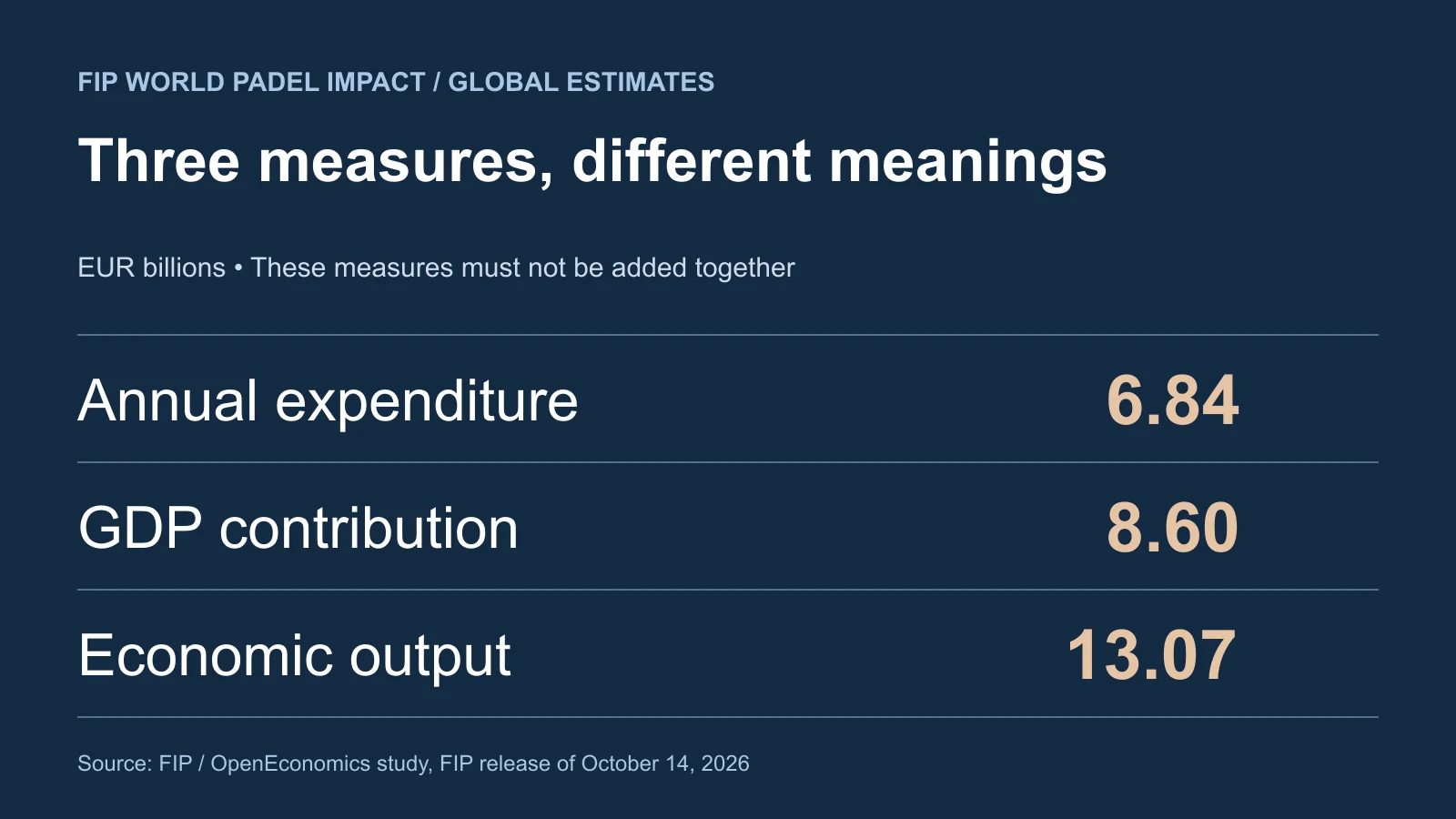
The International Padel Federation's new economic study estimates that padel supports €8.6 billion in global GDP, adding a broader economic-impact measure to an industry conversation often framed around court construction and participation.
Released with the 2026 World Padel Report, the work was developed with OpenEconomics. Its headline measures describe different layers of economic activity. They do not establish that padel operators collectively earn €8.6 billion, or that an individual club can expect a particular return.
Three figures with different meanings
FIP's October 14 release reports €6.84 billion in annual expenditure, €13.07 billion in economic output and €8.6 billion in GDP contribution, alongside more than 235,000 jobs. The study considers court rentals, facility construction, technical equipment, tournaments and country-level spending.
These are estimates from the study, not audited financial results from every business in the sport. Nor are expenditure, output and GDP three amounts that can be added together to produce a larger market total.
The accounting distinction is consequential. A court operator pays suppliers; suppliers pay for their own inputs. Gross output can count production across those successive stages. GDP measures value added, avoiding the repeated counting of intermediate inputs. The U.S. Bureau of Economic Analysis's GDP primer explains the underlying distinction between production, intermediate purchases and final output.
For a club, neither measure answers the narrower question of profitability. That requires its own revenues, payroll, rent, maintenance, financing and other expenses. A model of the industry's wider contribution cannot substitute for those accounts.
A federation report with a broader remit
The World Padel Report's publication page says the third edition draws on contributions from 70 national federations through its 2026 survey, together with information from FIP's international activities and competitions. It was presented at the October 12 General Assembly in Madrid before publication on October 14.
Its remit extends beyond economics to participation, infrastructure, international competitions and player profiles. That breadth helps explain why the report contains multiple kinds of measures, gathered for different questions. A participation estimate, a facility count and an economic-impact result describe related parts of the sport, but have different units and evidence behind them.
The publication is also separate from the Playtomic and Strategy& report discussed in our . The shared year and similar titles do not make their figures interchangeable. A comparison needs matching definitions, geography and measurement dates.