PlayExplainer
Padel serve rules: why glass and fence contact have different outcomes
A practical guide to the bounce, contact height and feet, followed by a simple progression for practicing a reliable serve.

By X3Insights News, News desk
2 min read
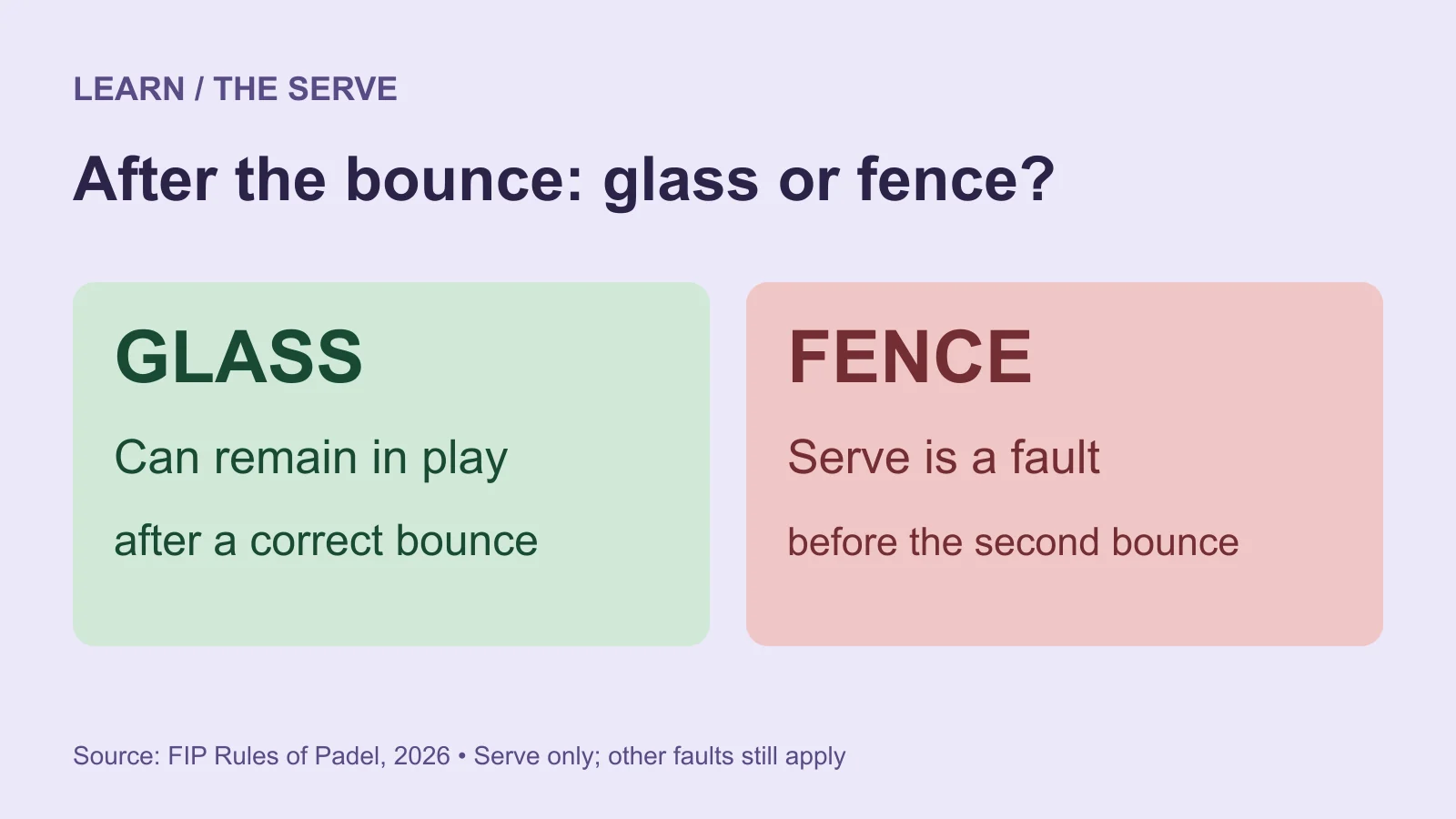
A padel serve can land in the right box and still be a fault. The bounce, contact height, feet and the ball's next contact all matter, making the serve a useful starting point for players learning how the glass and fence affect a point.
The practical priority is to make the action repeatable before adding speed or a narrow target. A spectacular trajectory is little use if the serve begins outside the rules.
Build the legal action first
Under Rules 6–9 of FIP's rules effective January 1, 2026, bounce the ball in the serving area behind the service line, then strike it at or below waist height with at least one foot grounded. Keep your feet off the service line and the imaginary extension of the center line until contact.
Serve diagonally into the opposite service box; a bounce on its boundary line counts as in. The receiver must let the ball bounce before returning it.
After a correct bounce, hitting the metallic fence before the second bounce makes the serve a fault. Glass contact is different. A serve that clips the net and lands correctly can be repeated, provided it does not then hit the fence before its second bounce. A second-serve let repeats the second serve; it does not restore a first serve.
These checks concern whether the point starts legally. Star Point scoring concerns how the game is decided once points have been played.
A practice sequence for the next session
Try this progression with a partner, treating it as a practice exercise rather than a formal test. Start without a receiver: choose a generous target inside the diagonal box and serve at a comfortable pace. Ask your partner to watch the feet and contact height from a safe position outside the ball's path.
Then move the target toward the side glass, keeping enough margin to see what happens after the bounce. Track two things separately: whether the first bounce lands in the box and whether the next contact is glass or fence. This makes an apparently accurate fault easier to diagnose.
Finally, add a receiver and play the return. Record which serves produce a manageable next shot for the serving pair, rather than counting only untouched winners. A serve can be useful because of the return it sets up, even when it does not win the point outright.
Separate placement from pace
If the wide target produces repeated faults, bring it inward before trying to hit harder. Change one element at a time so that the effect is visible: target, speed or starting position.
For a group lesson, rotate the observer role as well as the server and receiver. Watching a partner's setup can make a foot crossing or high contact easier to recognize in your own action. The session then has a concrete goal: a legal, reproducible serve that starts the rally with an intentional target.