PlayExplainer
Padel at the net: when a touch or an early strike costs the point
How FIP’s net-contact rules work, when the returning-ball exception applies, and a controlled drill for spacing and balance.

By X3Insights News, News desk
3 min read
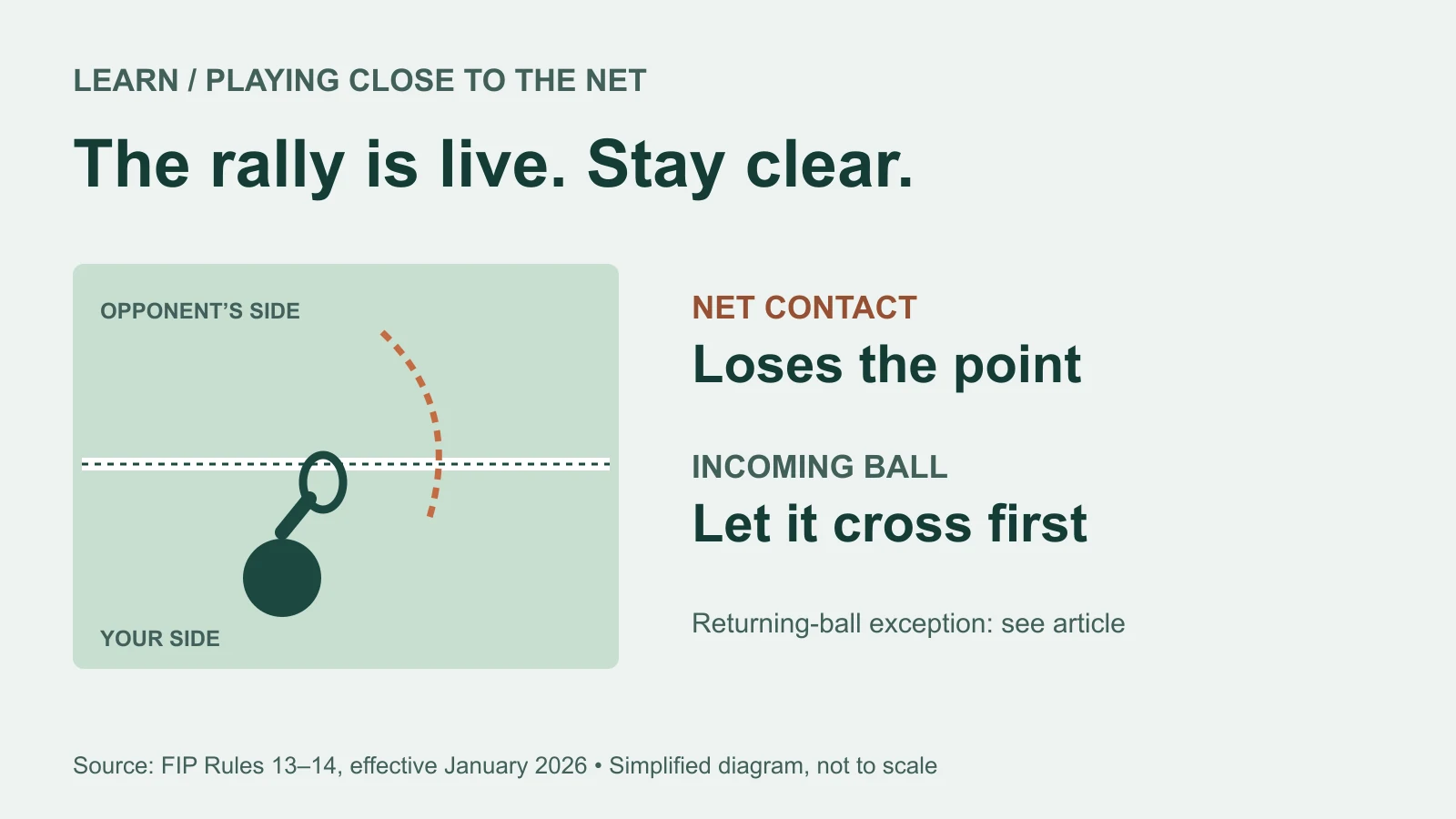
A close volley can be struck cleanly and still lose the point if a shoe, shirt or racket touches the net while the rally is live. The distinction is especially important when players chase a short ball or follow a smash toward the center of the court.
The practical challenge is to attack close to the net while leaving enough room to stop and recover. The rules draw a boundary around that movement; they also allow a narrow exception for a ball that has bounced on your side and then returns over the net.
Three situations to recognize
Rules 13 and 14 of the FIP rules effective January 1, 2026 distinguish these cases:
- Net contact: a player loses the point if the player, racket or anything worn or carried touches the net, its posts, the tension cable or the opponent's court while the ball is in play.
- Early contact: hitting the ball before it has crossed the net loses the point. The routine volley must be contacted on your side; reaching forward does not move that boundary.
- A ball returning over the net: if an opponent's shot bounces correctly in your court and then returns to their side, you may reach over to play it. You must avoid touching the net, posts or opponent's court, and the return must otherwise be legal.
The last situation can arise after a spinning or forceful shot. It is an exception tied to the ball's path after the bounce, rather than general permission to intercept an incoming ball on the opponent's side.
Contact and follow-through are different moments
When watching a fast exchange, identify where the ball was struck before judging where the racket finished. A racket extending forward after contact is not, on its own, evidence that the player intercepted the ball too early. A legal contact can still be followed by a fault if momentum carries the player or equipment into the net during the live point.
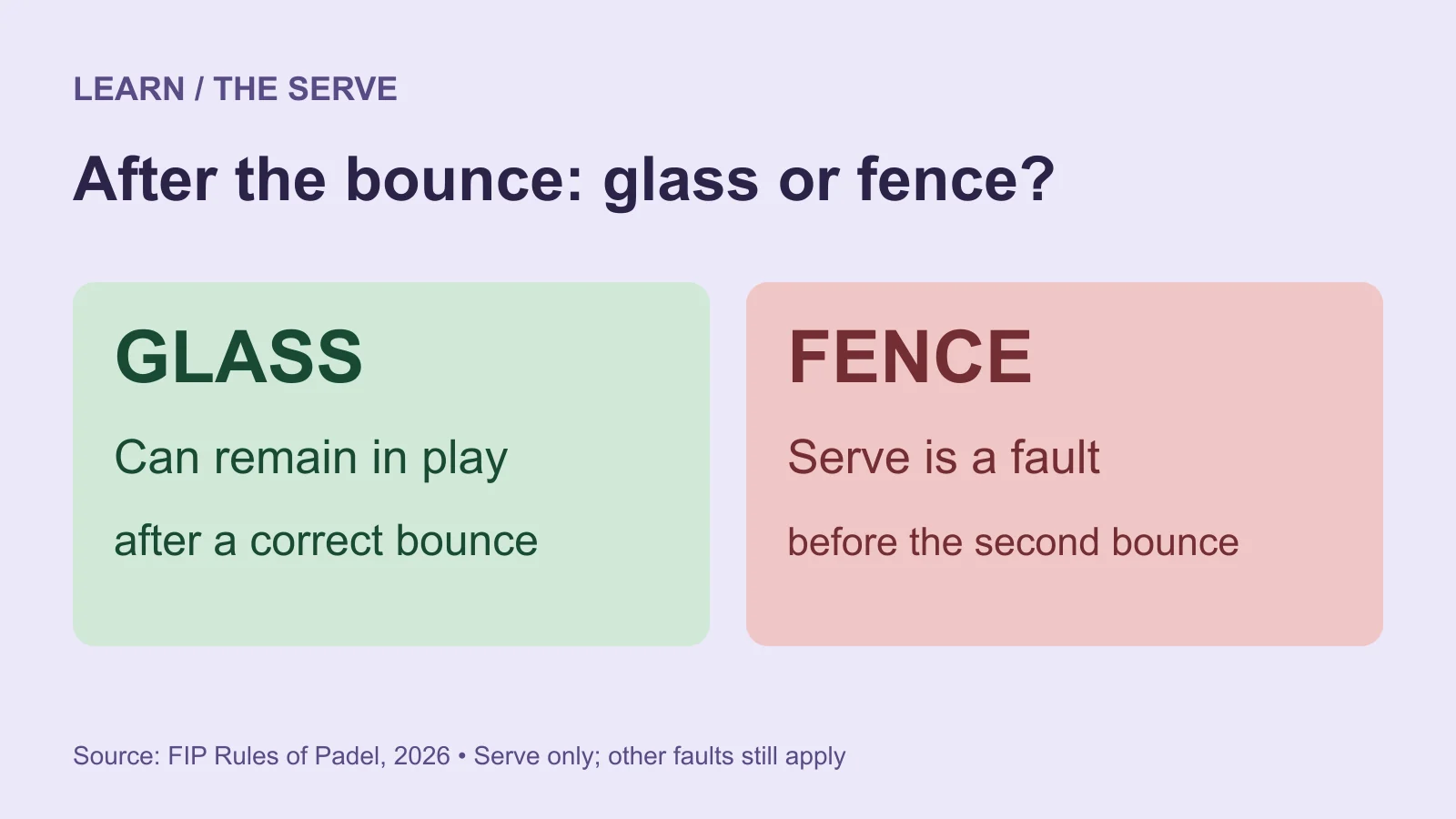
This is a different issue from the service rules governing glass and fence contact. Here, the useful questions concern the player's position, the contact point and whether the rally had ended.
Practice the stop before adding the put-away
Try a controlled exercise with a partner or coach. Begin with comfortable feeds to the volley and choose a starting distance that lets you strike without reaching toward the net. After each shot, hold a balanced finish, recover the racket and reset. The goal is to notice whether a forward step continues after the ball has left the strings.
Next, alternate a deeper feed with a shorter one. Move to the ball, but keep the swing compact enough to stop under control. If the short feed repeatedly pulls you too close, move the starting position back and reduce the pace. Do not make touching or leaning on the net part of the drill.