PlayExplainer
Underfoot on tour: what padel’s turf and sand mean for U.S. courts
A smooth television image does not mean a sand-free court. The rules, tour examples and maintenance questions that help explain the surface beneath the game.

By X3Insights News, News desk
3 min read
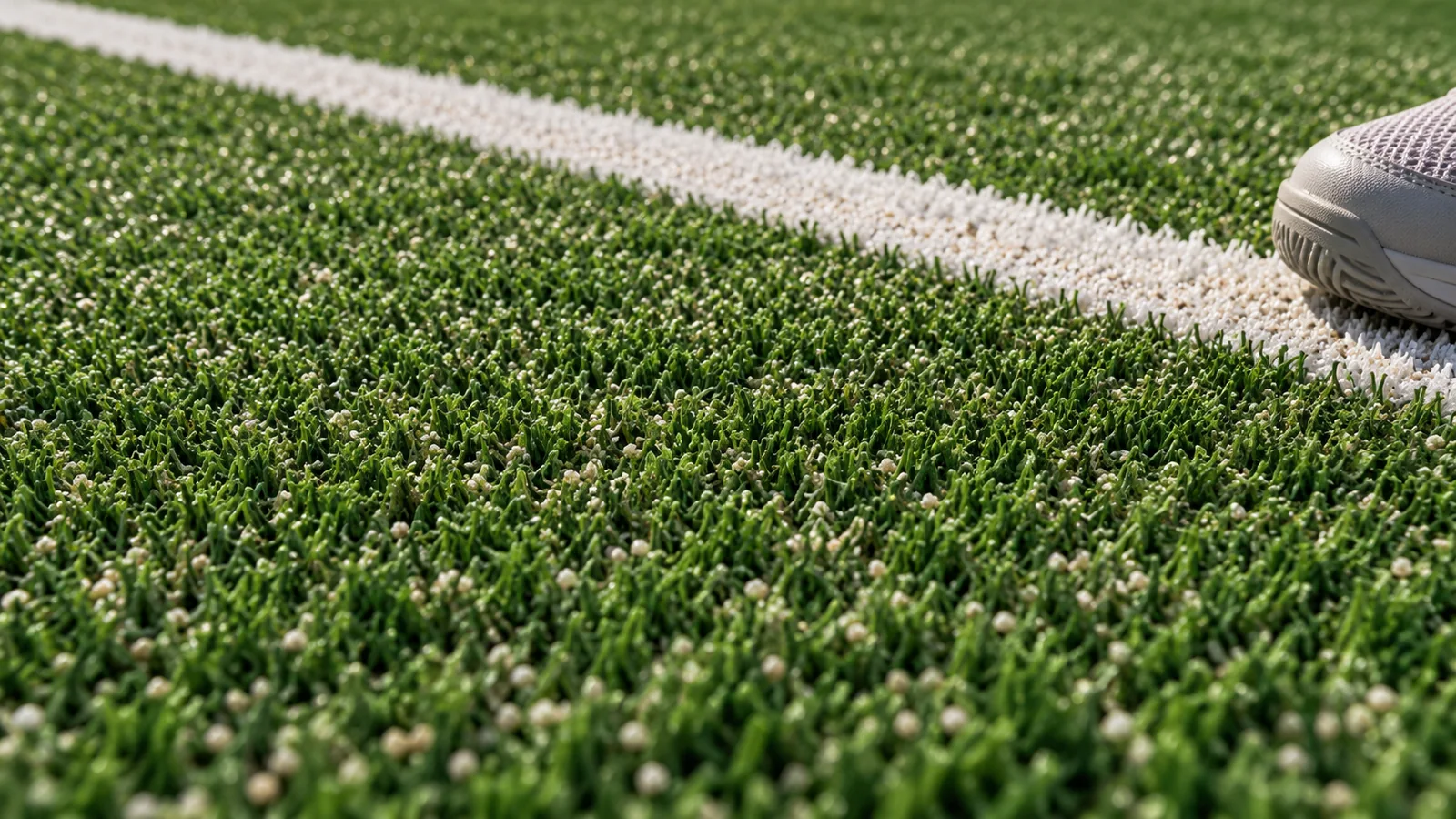
Watch an international padel tournament and the court can look almost carpet-smooth. Visit a local club and loose sand may be much more visible. The visual difference is real, but it does not establish that the first surface contains no sand, or that the second is inferior.
For U.S. players and club operators, a more useful equipment question sits below the racket: what surface system has been installed, what infill does it require and how is it maintained? Product construction, installation and ongoing care need to be considered together.
The rulebook does not prescribe one blue carpet
The FIP Rules of Padel's ground-surface provisions allow cement, synthetic material or artificial grass, subject to a regular ball bounce and the applicable requirements. They also allow green, blue, terracotta and similar tones, with a consistent floor color clearly distinct from the walls.
That is a useful corrective to a common visual shortcut. A court does not become professional simply because it is blue, and a green surface is not excluded from the rules. Color can help viewers identify a tournament, but it cannot stand in for a technical specification or an inspection.
The same distinction applies to photography. A broadcast image can show the overall color and apparent texture. It usually cannot establish infill depth, seam condition or whether the base is performing as designed.
What the international tour actually tells us
MONDO's North American padel page identifies the company as the official turf partner of FIP and Premier Padel and presents Premier Supercourt X3 as its tour surface. This is a manufacturer description of its relationship and products, not an independent comparison with every competing surface.
There are also event-specific references. The company's Madrid 2026 account describes four Premier Supercourt X3 courts at the Movistar Arena. Its Riyadh surface article identifies that system at the season opener.
By contrast, the official Milan event page names MONDO as the turf provider but does not specify the model in that field. A brand-level listing should not be upgraded into a model-level claim. This matters when a club says it uses the same surface as a particular tournament: ask exactly what is shared.
Why less visible sand can still be infill
On its Supercourt XN product page, MONDO describes a textured-fiber construction combined with silica-sand infill. Textured fibers can hold infill within the turf structure, which helps explain why surface appearance alone is an unreliable guide to whether sand is present.