PlayExplainer
Your first padel racket: what shape, balance and weight actually mean
The number on the scale tells only part of the story. A guide to reading racket specifications before the holiday sales.

By X3Insights News, News desk
3 min read
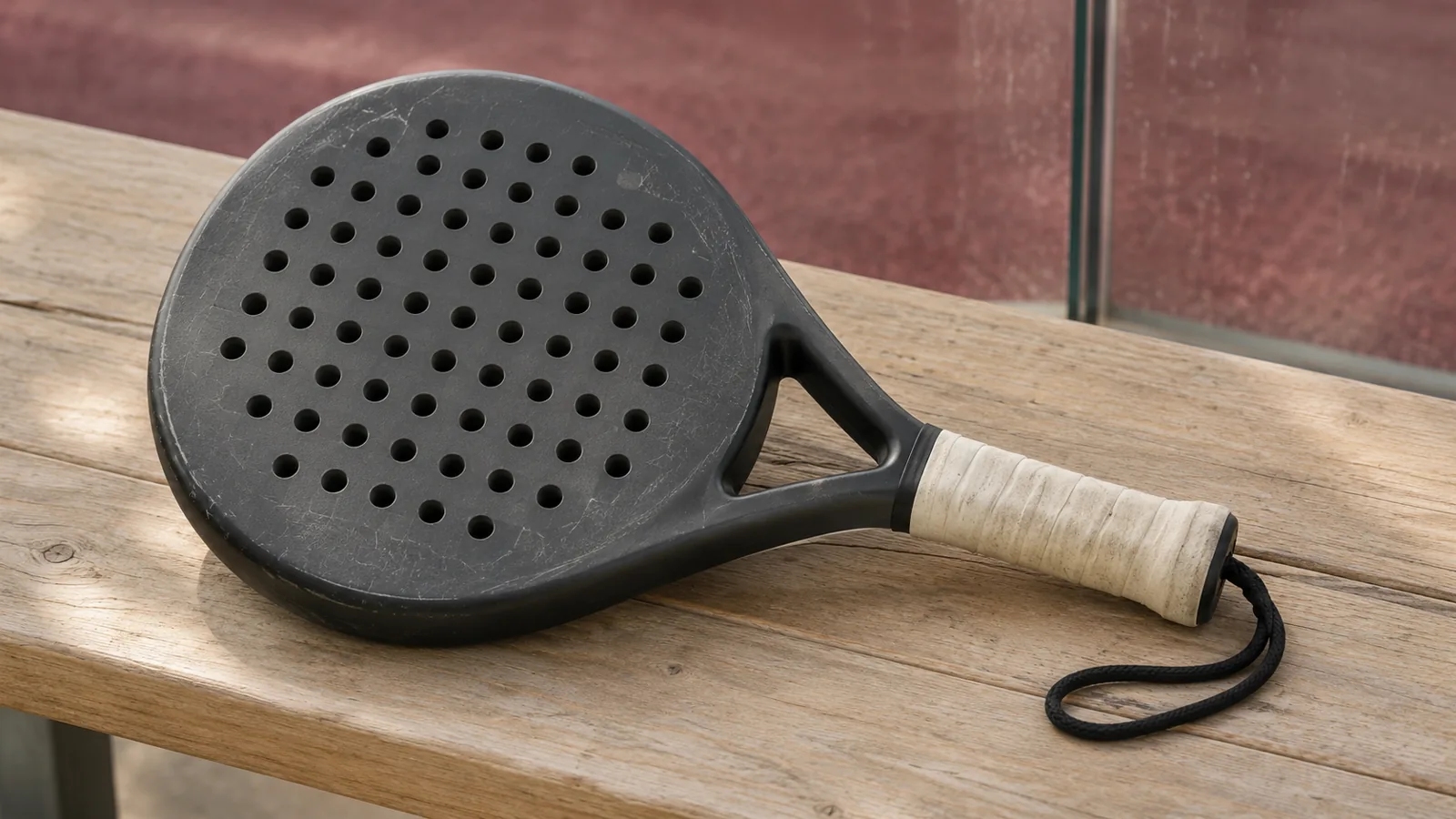
Two padel rackets can weigh the same and feel different in a player's hand. The missing information is where that weight sits — and how much effort it takes to move the racket through a stroke. A round face, meanwhile, does not guarantee a light head.
For players comparing their first racket ahead of Black Friday, the specifications answer different questions. Weight describes total mass. Balance locates its center of mass. Shape describes the outline of the hitting surface. Reading all three together is more useful than treating any one as a verdict on who the racket suits.
Shape describes a family, not a fixed playing level
The familiar categories are round, teardrop and diamond. The LTA's equipment guide associates round rackets with control and consistency, diamonds with attacking power, and teardrops with a combination of the two. The sweet spot is the area of the face where contact produces the most effective response.
HEAD's guide describes round rackets as generally having a larger, central sweet spot and diamonds a smaller one nearer the tip. That helps explain why a diamond can demand more precise contact. It does not turn the shape into a complete description of a finished racket.
Current product specifications show the limits of the shorthand. In Babolat's adult range, the round Counter Origin is labeled head light, the round Counter Vertuo 2.6 even balance, and the round Counter Veron 2.6 head heavy. The same broad shape appears with three different balance descriptions. These are examples of how specifications differ, rather than a ranking of those rackets.
Balance explains where the weight sits
A racket's balance point is its center of mass: the point at which it can balance without tipping. A point farther toward the head means a higher balance; one closer to the handle means a lower balance. Some specifications use a distance, while others use labels such as head light or head heavy.
Balance helps explain why a racket can feel more demanding than its listed weight suggests. But it still does not fully describe the effort needed to accelerate it. That also depends on the distribution of mass around the axis of the swing, a property called moment of inertia.
A 2022 experimental study in Sensors, which examined 137 padel rackets, measured those inertial properties. Higher inertia requires more torque to produce the same acceleration. The practical distinction is between how heavy a racket is when held still and how resistant it is to being moved. A balance label and a scale reading do not replace a measurement of that resistance.